

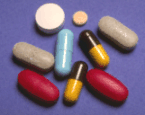
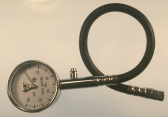
 Mercury or mercury compounds are found in many instruments regularly used in medical institutions such as blood pressure monitors,
dental amalgam, thermometers and thermostats. Mercury and mercury-containing products are used in patient areas and pathology labs, in clinical procedures
(such as x-rays), and in medicines.
Mercury or mercury compounds are found in many instruments regularly used in medical institutions such as blood pressure monitors,
dental amalgam, thermometers and thermostats. Mercury and mercury-containing products are used in patient areas and pathology labs, in clinical procedures
(such as x-rays), and in medicines.
At least 20 different medical products contain mercury, and many mercury-containing solvents and degreasers are found in labs, housekeeping departments, kitchens, and maintenance areas.
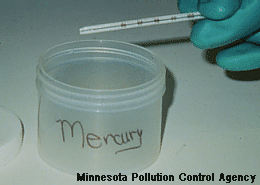 Storage rooms may also be filled with used, damaged, or outdated equipment or supplies that contain mercury. Mercury is an ingredient in some proprietary formulas used to manufacture medical and industrial supplies.
 Breakage, waste disposal, and spills from these products release mercury to the atmosphere or to drains, where it can persist for many years.
Some products that formerly contained mercury are no longer manufactured. However, older products are still part of the environment. In fact, broken or obsolete equipment is often the primary source of mercury waste at many hospitals and clinics.
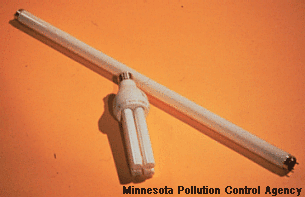 Industrial and chemical uses of mercury are manifold in the medical community: mercury is present in fluorescent and high-intensity lamps, thermostats and switches, and a variety of generators,
manometers, and batteries.
Industrial and chemical uses of mercury are manifold in the medical community: mercury is present in fluorescent and high-intensity lamps, thermostats and switches, and a variety of generators,
manometers, and batteries.
 Non-medical uses of mercury are also present in a variety of products: cleaning solutions, preservatives, paints, and antifouling agents for wood and other surfaces. Some uses of mercury are purely playful or convenient, such as singing greeting cards, talking refrigerator magnets, lighted athletics shoes, and toys. Patients, visitors, and employees bring these products into the facility.
 According to the EPA's proposed rule for medical waste
incinerators, incinerators are a
significant source of mercury emissions
to the atmosphere. Medical care facilities may also emit mercury through
accidental spills and releases, that is, through
discharges to
wastewater and
landfills. The amount of mercury in
such releases may be quite small. Still, any release is costly and may add
to mercury's buildup in the environment. Mercury spills may result in
additional fish advisories, and in some
circumstances, mercury spill cleanups can be expensive. The guidelines
recommended in this program will help minimize or eliminate mercury
releases from medical facilities.
According to the EPA's proposed rule for medical waste
incinerators, incinerators are a
significant source of mercury emissions
to the atmosphere. Medical care facilities may also emit mercury through
accidental spills and releases, that is, through
discharges to
wastewater and
landfills. The amount of mercury in
such releases may be quite small. Still, any release is costly and may add
to mercury's buildup in the environment. Mercury spills may result in
additional fish advisories, and in some
circumstances, mercury spill cleanups can be expensive. The guidelines
recommended in this program will help minimize or eliminate mercury
releases from medical facilities.
 To Introduction Menu
 |
© Copyright |