 Significant amounts of mercury are directly released from the
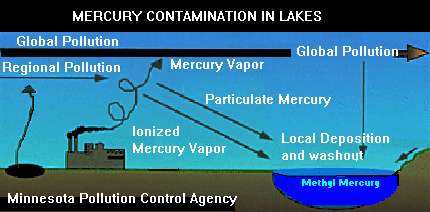
earth's crust by the process of degassing. Both natural and manmade emissions are modified by biological processes into forms more directly harmful to human beings. Mercury is somehow less toxic in its volatile form, mercury-zero, than in organic compounds like methylmercury or inorganic salts (mercury-two).
Significant amounts of mercury are directly released from the
earth's crust by the process of degassing. Both natural and manmade emissions are modified by biological processes into forms more directly harmful to human beings. Mercury is somehow less toxic in its volatile form, mercury-zero, than in organic compounds like methylmercury or inorganic salts (mercury-two).
 Common bacteria of the soil and water have adapted to the presence of mercury. They have developed methods to detoxify its organic compounds
and salts to the elemental form of mercury zero. Mercury zero, however,
is volatile, and thus can spread
throughout the environment through secondary biological mechanisms.
Once it reaches inland aquatic environments, mercury zero can again
accumulate and be transformed into methylmercury, the toxic form that
bioaccumulates in fish,
animals, and humans. This toxic transformation can occur from any of
three causes:
Common bacteria of the soil and water have adapted to the presence of mercury. They have developed methods to detoxify its organic compounds
and salts to the elemental form of mercury zero. Mercury zero, however,
is volatile, and thus can spread
throughout the environment through secondary biological mechanisms.
Once it reaches inland aquatic environments, mercury zero can again
accumulate and be transformed into methylmercury, the toxic form that
bioaccumulates in fish,
animals, and humans. This toxic transformation can occur from any of
three causes: 
 To Mercury in the Environment Main Menu
 |
© Copyright |