
5. Proper Handling and Disposal of Mercury Products
Mercury often ends up in the environment because of improper handling and disposal of chemicals that contain mercury. This can be prevented by complying with the following simple rules to ensure careful handling of mercury-containing products.

- Use mercury only in uncarpeted, well-ventilated areas. Provide troughs on smooth-surfaced tables and benches to collect mercury spills. Reserve a room for mercury uses only; restrict traffic in the area.
- Ask workers to remove all watches and other jewelry - especially gold jewelry, since mercury readily combines with gold - and have them wear a mercury vapor respirator and protective clothing: gloves, disposable gowns, and shoe coverings.
- Prohibit smoking, eating, and drinking in areas where mercury is used.
- Train all workers to understand the properties and hazards of mercury and to carry out safe handling procedures and specific policies related to mercury disposal.
- Clean and calibrate all mercury-containing equipment according to the manufacturer's recommended handling procedures and the formal procedures posted by the facility's communications or safety program supervisors.
- Encourage all laboratory workers to read the material safety data sheets provided with each solution to determine not only the contents but also safe handling practices. Laws require sellers of mercury to provide buyers with a material safety data sheet and to have the buyer sign a statement regarding proper use and disposal.
- Clearly label instruments containing mercury.
- Mercury must be stored to avoid contact with chlorine dioxide, nitric acid, nitrates, ethylene oxide, chlorine, and methylazide since violent reactions occur.
- Store in tightly closed containers in a cool, well-ventilated area away from acetylene, ammonia, and nickel.
- Make sure that every laboratory facility has a mercury spill cleanup kit on hand for accidental spills. Having the right equipment on hand will limit the amount of mercury released to the atmosphere.
- Make sure personnel are familiar with the proper cleanup procedures for handling a spill involving mercury.
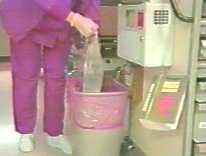
- Do not place mercury-containing materials in waste receptacles for biohazardous waste because mercury will be released to the atmosphere when the biohazardous waste is incinerated.
- When working with mercury solutions, make sure you are familiar with the laboratory's policies on proper disposal practices for these solutions.
- Follow proper procedures when cleaning or refilling instruments that contain mercury. Instrument cleaning, or refilling should take place in a well-ventilated area and, if possible, over a tray to contain any spills.
- Mercury should be handled in areas without tile flooring or carpeting to facilitate cleanup in the event of a spill. To minimize the risk of an accidental spill, never handle mercury over a sink.
 To Guidelines