The Marulan South limestone mine is part of the Blue Circle Southern Cement company. It is situated on the edge of the Shoalhaven River gorge adjoining the Morton National Park 380 km south west of Sydney.
The company supplies limestone to cement plants at Berrima and Maldon as well as the BHP steelworks at Port Kembla. The mine has a total production of three million tonnes per year. The mine has been in existence since 1929 with some of the original plant still in operation.
The limestone rock is drilled, blasted, loaded and hauled from the opencut mine to a processing plant where it is crushed and then dispatched in railtrucks. The crushing plant consists of primary, secondary and tertiary crushers. The limestone is transported between crushing stations and to dispatch silos by conveyors.
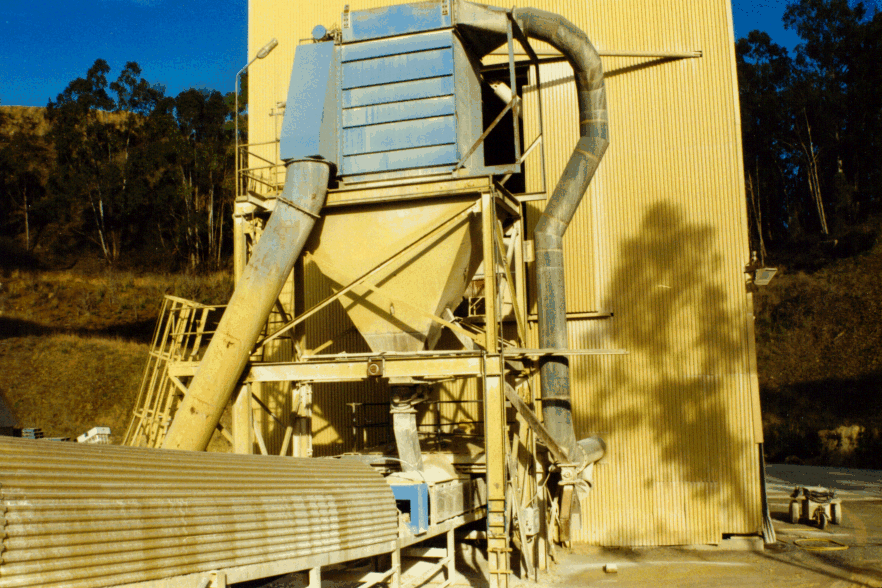
As a result of the crushing and conveying processes a significant amount of dust is generated. The primary and secondary crushers are connected to baghouses to minimise direct dust emissions to the atmosphere. Both baghouses have collection hoppers which hold up to 6 tonnes of fine limestone dust. The collected dust is discharged periodically back onto the conveyor system via an automatically controlled rotary valve and chute.
However as the collected dust is very fine a large portion of it becomes airborne again. Additional dust is generated from this fine material at conveyor transfer points or at conveyor return rollers, where material that has become lodged in small indentations in the conveyor surface is shaken off.
This dust either settles on the plant floor and equipment, which requires regular cleaning, or is discharged to the atmosphere. The airborne dust also poses a health hazard to employees.
Conveyer Unit
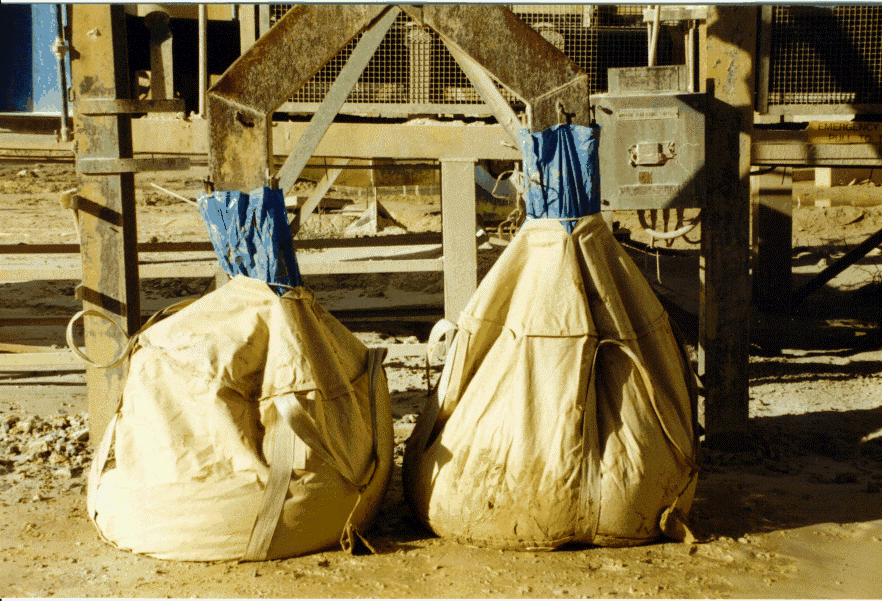
The cleaner production initiative implemented at Blue Circle was relatively simple. A bypass chute and second rotary valve were fitted to the collection hoppers on the primary and secondary crusher baghouses. The bypass chute was then connected to one tonne capacity bulkerbags. This enabled the collected fines to be discharged directly to a contained system and has eliminated the substantial generation of dust associated with the former practice. In addition the collected material is now sold as a lime fertiliser.
Bulkerbags
The three main benefits from this cleaner production initiative are:
- a reduction in airborne dust particles;
- a consequent reduction in plant cleaning requirements; and
- the collection of a saleable product.
Sale of the material as lime fertiliser generates income of $25,000 per year.
The costs of the modifications were only $3,500, giving a payback period of approximately two months.
The initial motivation came from the staff on the plant floor who wanted to reduce the hours involved in plant and equipment cleaning. Management subsequently instigated a business improvement program which is now researching the feasibility of placing additional collectors and loadout points to further reduce dust emissions.
The main obstacle encountered has been the occasional difficulty customers experience in unloading the bulkerbags due to moisture retention. This causes the limestone dust to set hard.
A feasibility study is being carried out on using truck loading facilities to enable the material to be taken out in bulk. This will overcome the moisture retention problem.
Alan Johnston
Blue Circle Southern
Marulan NSW 2579
Ph: 048 411 645
Fax: 048 411 617
Case Study Prepared:
June 1997 by ACCP
The Cleaner Production Case Studies Directory is part of EnviroNET Australia.
- For more information contact:
Environment Australia
Environment Protection Group
PO Box E305
KINGSTON ACT 2604
AUSTRALIA
Email: cproduction@ea.gov.au
URL: http://www.environment.gov.au/net/environet.html